
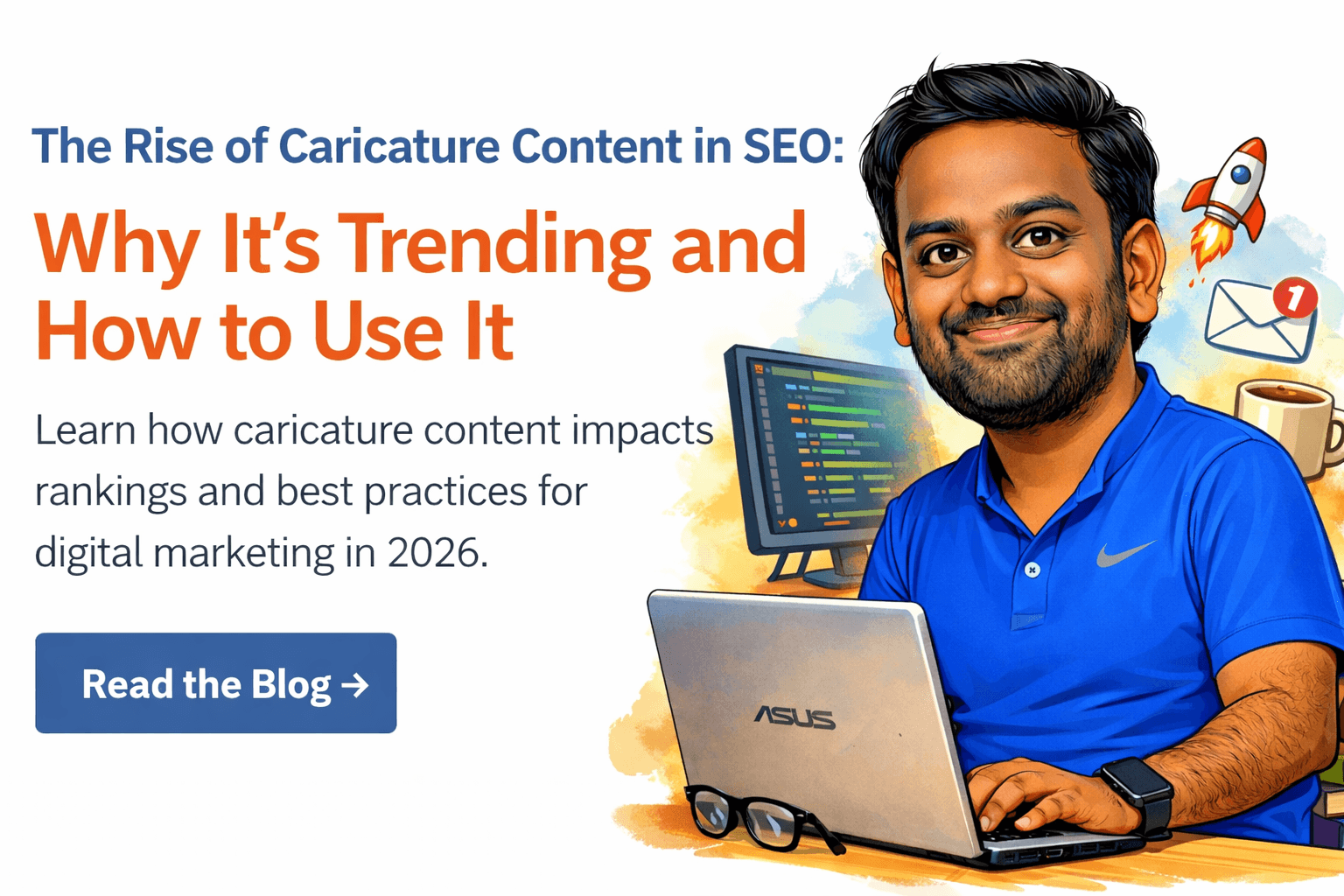
Caricatures are suddenly everywhere.
You see them on Top Digital Marketer LinkedIn profiles, personal websites, landing pages, SEO newsletters, and even inside blog posts. What once felt like a playful design choice has now become a serious content and branding tool—especially in SEO-driven marketing.
This rise isn’t accidental.
In 2026, people are overwhelmed with content. AI-generated images look polished but repetitive. Stock photos feel lifeless. And generic visuals no longer hold attention.
Caricatures, on the other hand, feel personal, intentional, and human. That’s exactly why people are searching for them—and why caricature-based content is quietly becoming an effective SEO support tool.
What Is Caricature Content in Digital Marketing?
In simple terms, caricature content is a stylised visual representation of a real person, brand, or idea—often exaggerated to highlight personality rather than perfection.
In digital marketing and SEO, caricatures are commonly used as:
-
Profile visuals for founders and consultants
-
Blog and article illustrations
-
Personal brand assets
-
Website hero or “about” section graphics
Unlike decorative illustrations, caricatures work best when they represent a real identity. That’s what gives them their impact.
Why Caricature Content Is Trending Now
The popularity of caricature content is directly connected to how users consume content today.
People scroll fast.
They skim before they read.
They pause only when something feels different.
Caricatures interrupt that autopilot scrolling because they don’t look automated. They carry emotion, expression, and personality. In an era dominated by AI visuals, that human signal stands out.
This shift is also reflected in search behaviour. More users are searching for ways to make their content and personal brand look unique, not just optimised.
Is Caricature Content an SEO Tool?
Caricatures are not a ranking factor by themselves.
They don’t replace keywords, backlinks, or technical SEO.
But they influence everything around SEO.
Caricature-based visuals help SEO by improving:
-
Time spent on page
-
User engagement
-
Content memorability
-
Brand recall
-
Social sharing
Search engines observe how users interact with content. When people stay longer, scroll deeper, and return to a site, those signals matter.
In that sense, caricature content supports SEO indirectly but meaningfully.
How Caricature Content Helps Search Performance Indirectly
Modern SEO rewards content that feels useful, trustworthy, and engaging. Caricatures support this by making content feel less mechanical and more authored.
When users feel a real person behind the content, they are more likely to:
-
Read instead of skim
-
Trust the message
-
Share the page
-
Search for the brand again
Branded searches and repeat visits are powerful long-term SEO signals. Caricatures help trigger those behaviours by reinforcing identity.
How to Use Caricature Content Correctly (Practical Guidance)
This is where most people get it wrong.
Caricatures work best when they are purpose-driven, not decorative.
Start by identifying where personality matters most. For most professionals and brands, this includes personal branding, thought-leadership content, and educational blogs.
A caricature placed next to an author bio or at the top of a long-form article immediately signals, “This content has a real voice behind it.”
On landing pages, caricatures can replace generic hero images to create warmth and approachability—especially for consultants, freelancers, and service-based businesses.
On social platforms, caricatures help posts stand out in crowded feeds, increasing engagement and click-through rates to blogs.
Using Caricatures in Blogs Without Hurting SEO
A common concern is whether visuals like caricatures affect page speed or technical performance.
They don’t—if handled correctly.
The key is optimisation.
Caricature images should be:
-
Properly compressed
-
Descriptive in file names
-
Paired with natural alt text
-
Relevant to the content, not random
Alt text should describe the image naturally, not stuff keywords. This improves accessibility and helps search engines understand context.
Caricatures and Personal Branding SEO
Personal brands benefit the most from caricature content.
In 2026, Google places increasing emphasis on who is behind content, not just what the content says. Expertise, experience, and identity matter.
Caricatures help reinforce that identity visually. Over time, users begin associating the caricature with the author. This strengthens brand recall and increases branded searches—one of the strongest long-term SEO signals.
This is especially effective for consultants, marketers, educators, and founders.
Caricature Content vs AI-Generated Images
AI-generated visuals are fast and impressive, but they come with a growing trust problem. Many users can now recognise AI imagery instantly, and that recognition often reduces emotional connection.
Caricatures, when created intentionally, signal effort and authorship. They don’t try to look “perfect.” They try to look recognisable.
In SEO terms, recognisability beats perfection.
Where Caricature Content Works Best
Caricatures perform best in contexts where personality, trust, and clarity matter more than aesthetics alone.
They work especially well for:
-
Educational blogs
-
Thought-leadership articles
-
Personal websites
-
About pages
-
LinkedIn content driving blog traffic
They are less effective for purely transactional pages where users want speed and price comparison. Context matters.
Common Mistakes to Avoid
The biggest mistake is using caricatures without a clear reason.
Random placement, inconsistent styles, or caricatures that don’t resemble the person or brand reduce trust instead of building it.
Another mistake is treating caricatures as a shortcut. They amplify good content—but they don’t compensate for weak writing or unclear messaging.
Why This Matters for SEO in 2026
SEO in 2026 is moving away from surface optimisation and toward experience and trust.
Search engines are better at understanding context. AI systems summarise content based on perceived value. Users reward content that feels human.
Caricatures fit into this ecosystem because they support memorability, engagement, and identity—three things modern SEO depends on.
How Digital Hari Approaches Caricature-Driven Content
Digital Hari treats caricature content as part of a broader strategy, not a design trend.
The focus is always on alignment—between message, audience, visual identity, and search intent. When caricatures support the story rather than distract from it, they become a quiet but powerful SEO ally.
Final Thoughts
Caricature content is trending in SEO not because it’s artistic, but because it’s human.
People search for tools and methods that help them stand out, connect, and be remembered. Caricatures do exactly that when used with purpose.
They won’t replace strong SEO fundamentals.
They won’t guarantee rankings.
But when paired with quality content and clear intent, they help content perform better in ways that matter—both to users and to search engines.
That’s why caricature content isn’t just a trend.
It’s a response to where SEO is heading.
How to Use Caricature Content: FAQs for SEO and Marketing
Caricature content can be used to represent a real person or brand across blogs, websites, and social media. It works best in personal branding, educational content, and thought-leadership posts where personality and trust matter.
Caricatures can be placed at the top of a blog as an author visual, within sections to support explanations, or near call-to-action areas. They should always relate to the topic and reinforce the message, not distract from it.
Caricatures do not directly improve rankings, but they support SEO by increasing engagement, time on page, and brand recall. These user behavior signals help content perform better over time.
Caricatures are less effective on highly transactional pages like pricing or checkout pages. They work best where storytelling, explanation, or personal connection is important.
Yes. Caricatures are especially effective for consultants, freelancers, and creators because they create a recognizable visual identity that users remember and associate with expertise. 1. How can caricature content be used in digital marketing?
2. How do you use caricatures in blog content?
3. Can caricature images help with SEO?
4. Where should caricature content not be used?
5. Is caricature content suitable for personal branding?